Energy
Balancing Lithium Extraction with Andean Salar Habitat
Multi-scalar spatial & remote-sensing analysis — Salar de Atacama, Chile
The Challenge
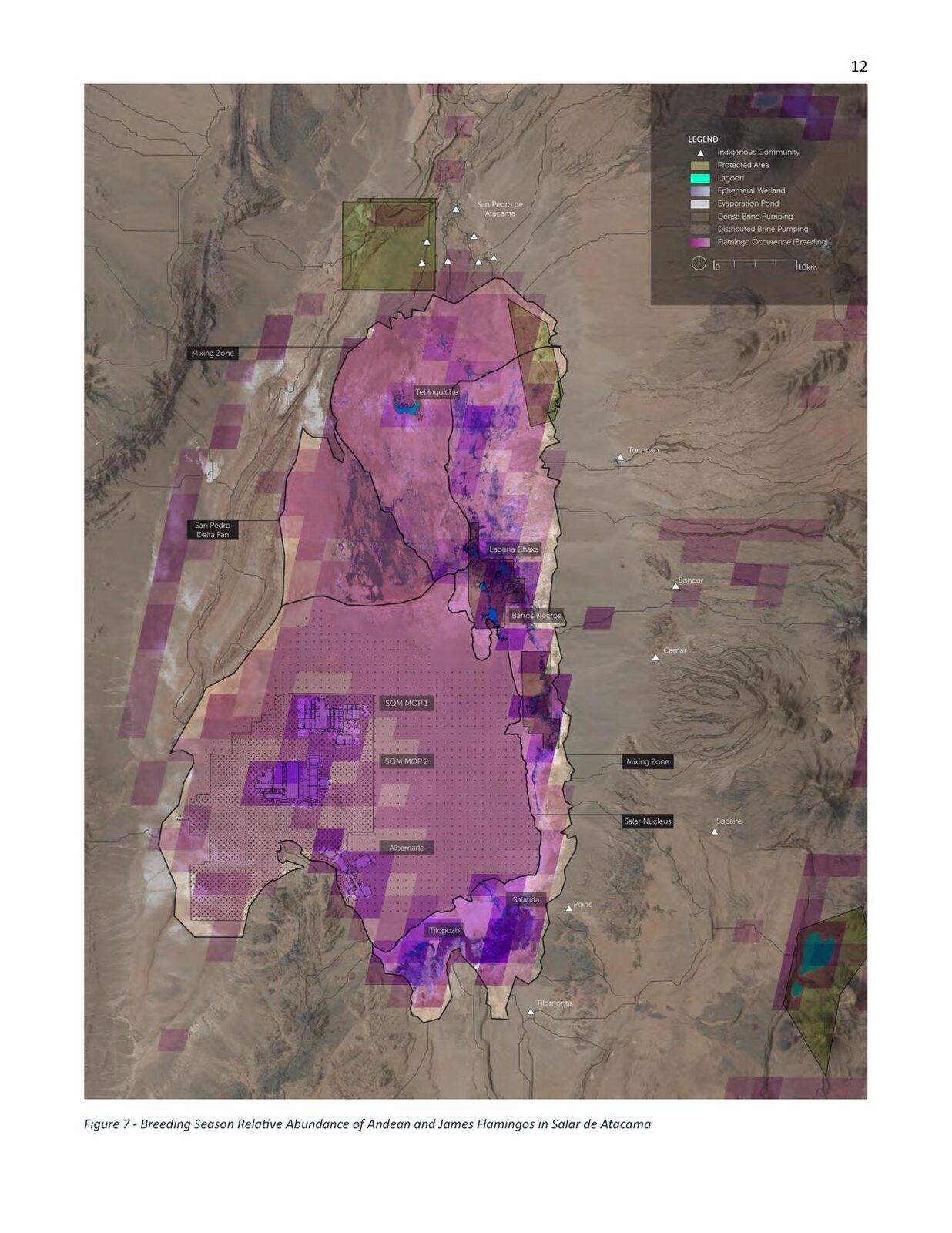
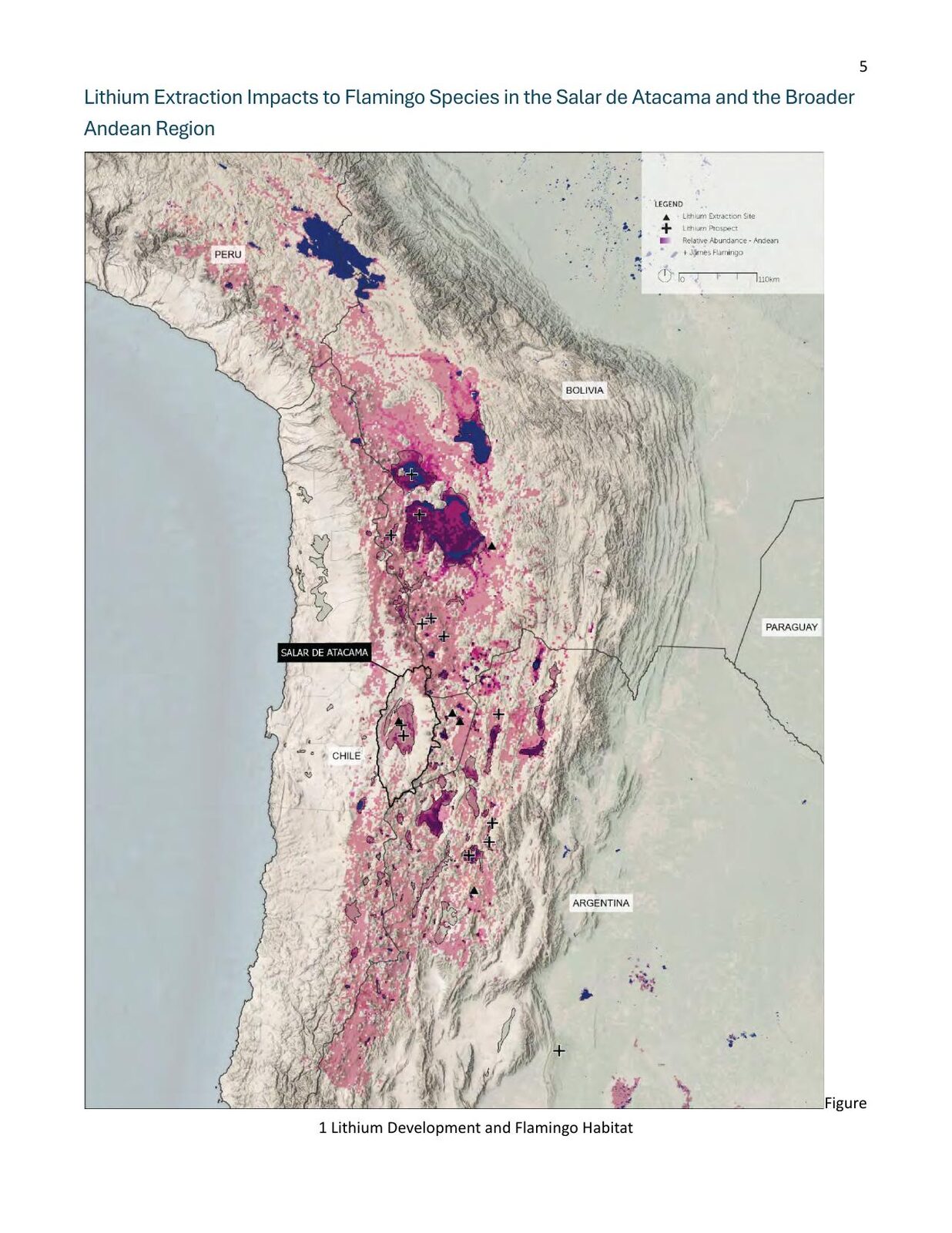
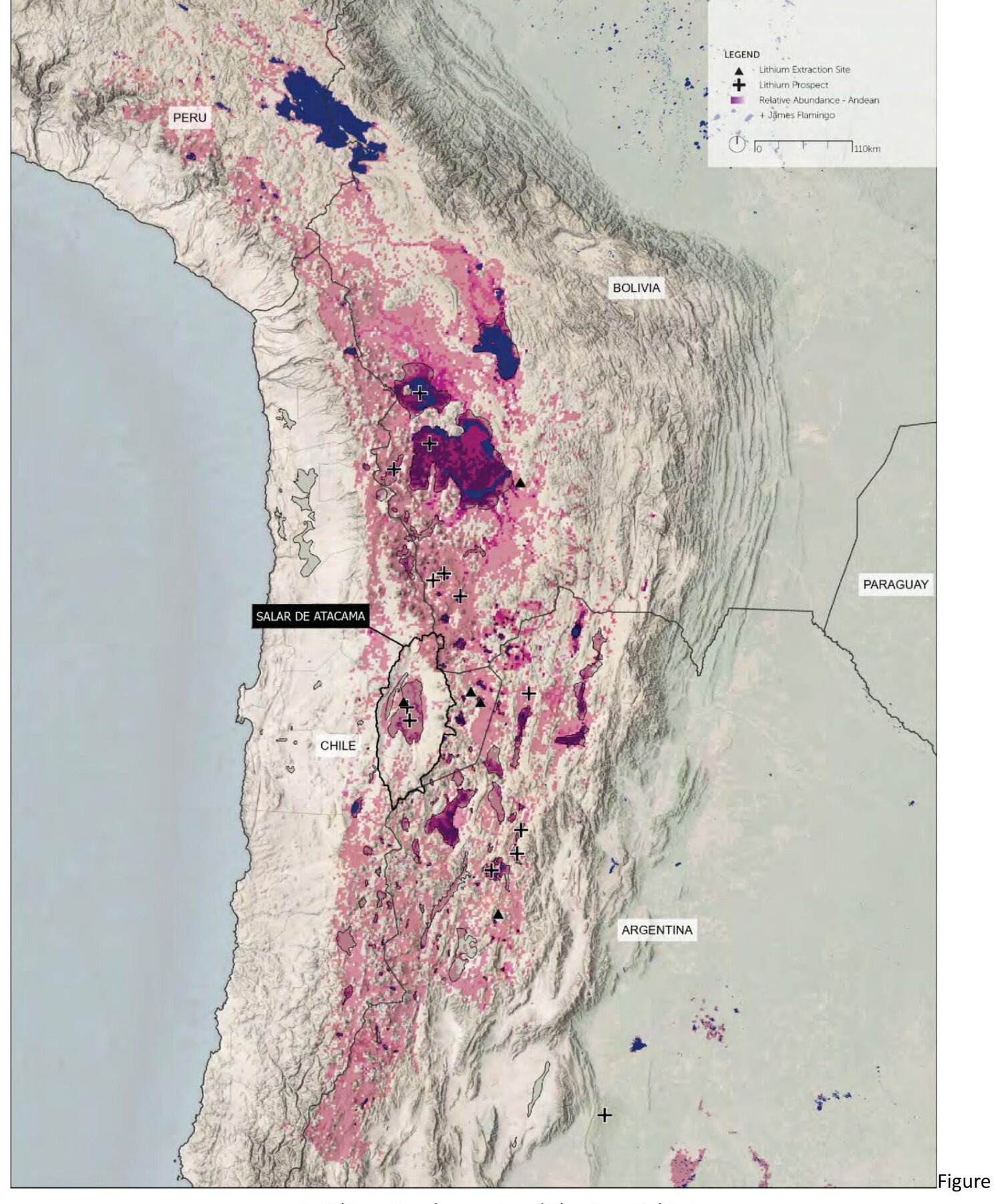
Lithium for the energy transition is extracted from closed-basin salt flats that also sustain high-elevation lagoons and habitat for Andean and James's flamingos. The analysis locates where extraction pressure overlaps that habitat, and tests whether early ecological change can be detected while it is still reversible.
Approach
A four-scale spatial analysis linking mineral development, protection policy, and ecological condition:
- Regional exposure — eBird flamingo abundance within HydroSHEDS basins intersected with USGS lithium-occurrence data.
- Protection gap — protected, unprotected, and unclassified salares compared against lagoon habitat value.
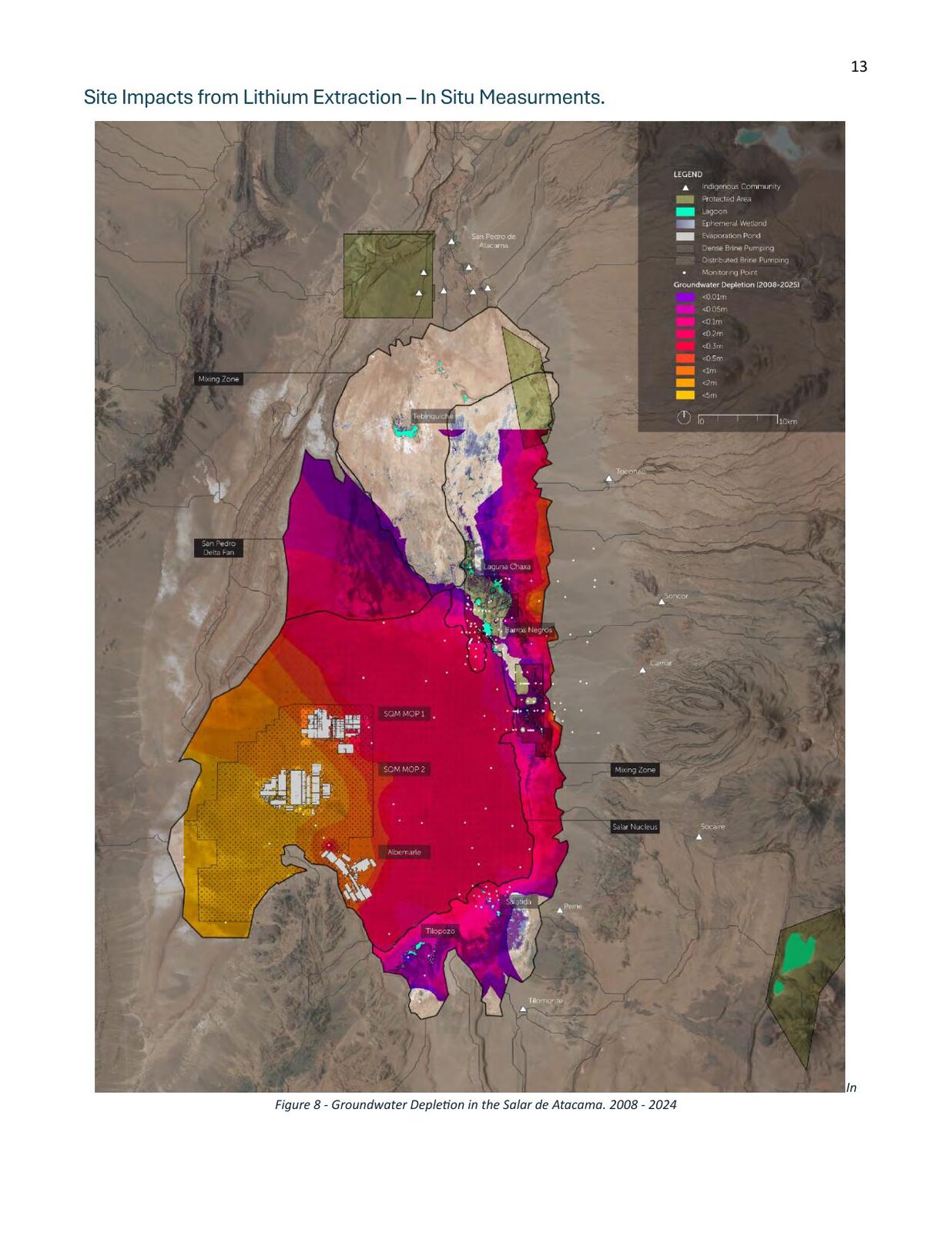
- Site hydrology — interpolated SQM groundwater-monitoring records (2008–2024).
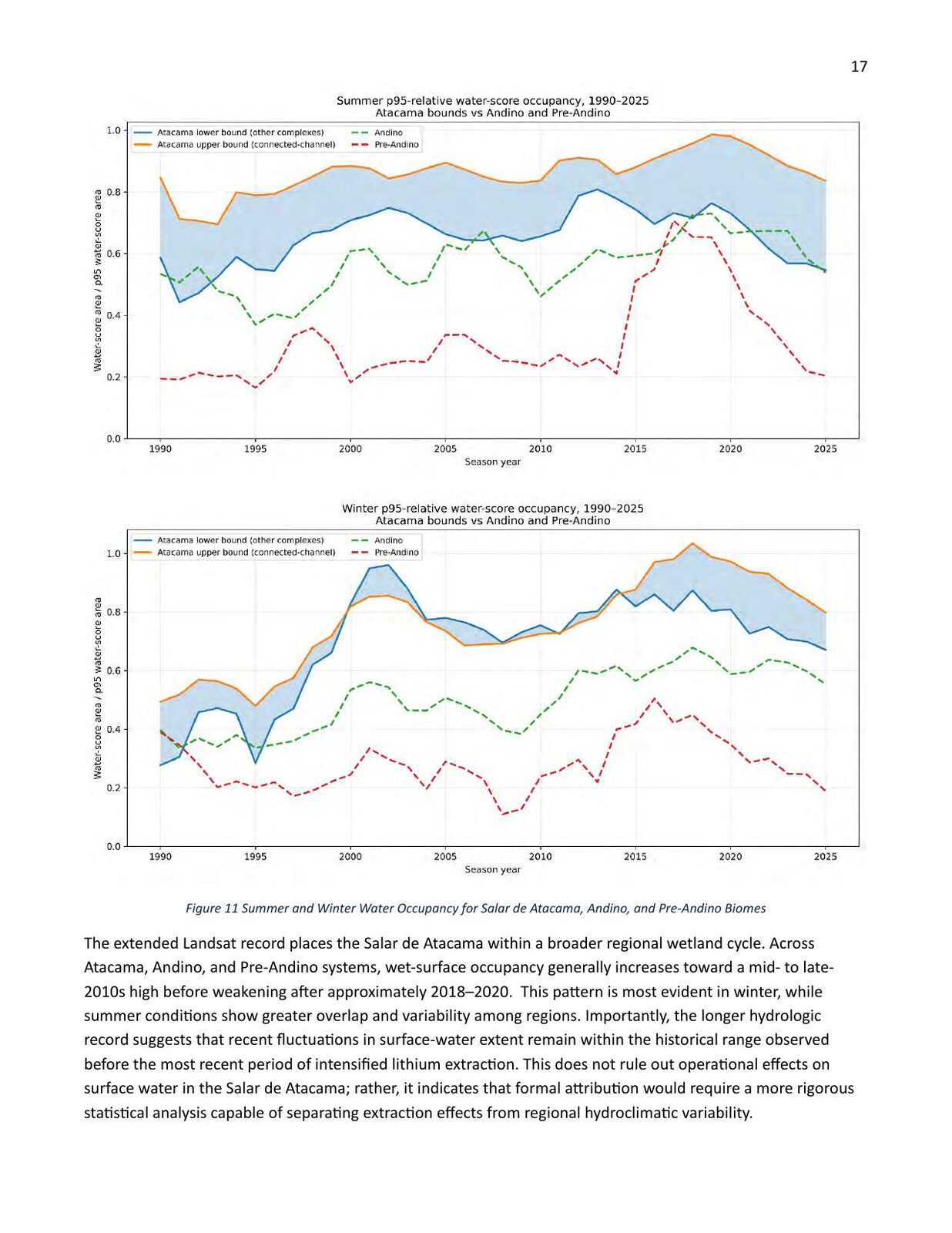
- Remote sensing — harmonized Landsat in Google Earth Engine; water-occupancy and NDVI normalized to each lagoon's 95th-percentile high-water benchmark.
Key Findings
- Lithium development overlaps roughly half of watersheds containing suitable flamingo habitat.
- Chile's proposed protected-salar network is misaligned with habitat value.
- Key lagoons sit at the edge of the extraction drawdown front; net pumping has exceeded natural nucleus evaporation since 2009.
- Surface water holds within historical range, but NDVI at Chaxa — the highest-abundance flamingo lagoon — has declined since ~2015, alongside falling recruitment.
Why It Matters
Siting and permitting for critical minerals increasingly turn on environmental constraints that are spatial: which basins, which lagoons, which drawdown fronts. The methods demonstrated here make those constraints visible early, at the stage where extraction decisions are still open.
Supporting Figures