Crediting Shade-Grown Cacao Agroforestry
Commodity production accounts for roughly a quarter of global forest disturbance, and cacao is one of the commodities doing it. Over ninety percent of the crop comes from smallholders farming about three hectares each, and Ecuador grows most of the world's fine-flavour Nacional variety. Shade-grown agroforestry would hold carbon and biodiversity on that land while keeping it in production, but it yields less cacao per hectare than full sun.
The last serious attempt to close that gap failed. Alternative food networks bet on a premium heirloom market that collapsed after 2008, certification alone did not secure access to premium buyers, and many producers now regard shade-grown systems with suspicion. The open question is what carbon and biodiversity credits would have to be worth before a smallholder could afford the canopy, and where those payments would do the most work.
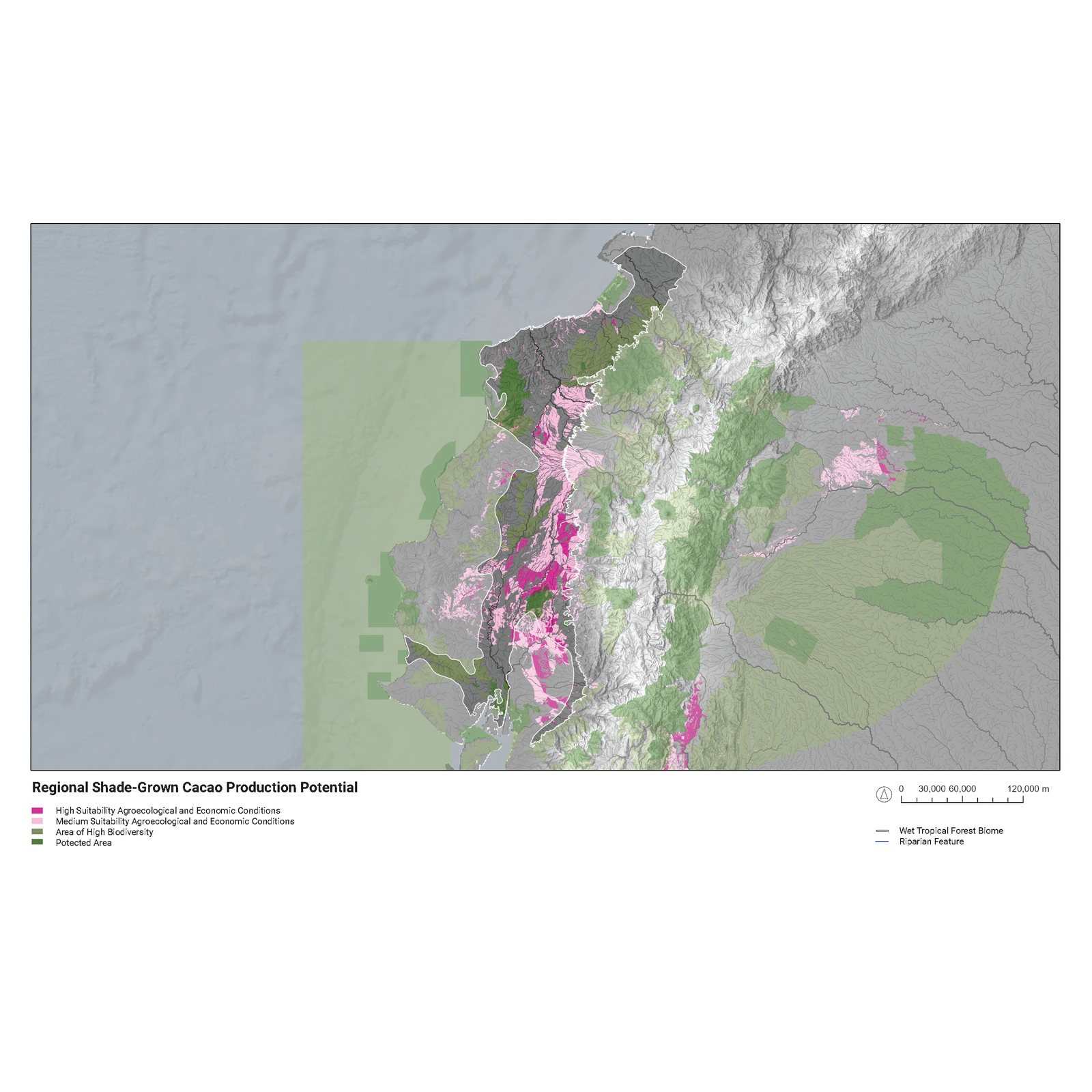
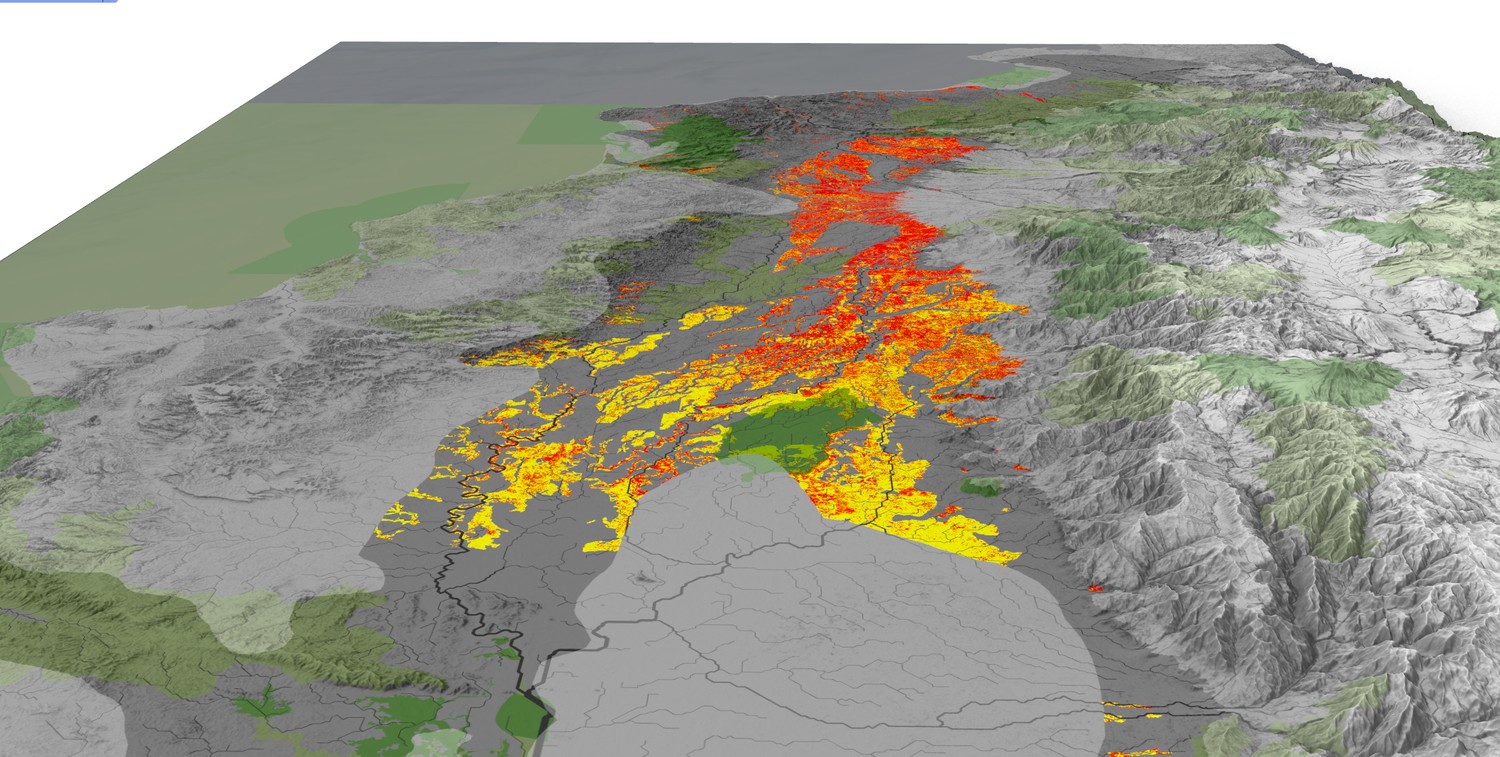
The study pairs a review of carbon and biodiversity crediting mechanisms with a geospatial and economic assessment of Ecuador's Wet Tropical Forest bioregion.
- Suitability — the agriculture ministry's cacao agro-ecological zones overlaid with protected areas and IUCN/BirdLife Key Biodiversity Areas, isolating land where shade-grown cacao is viable both biophysically and economically.
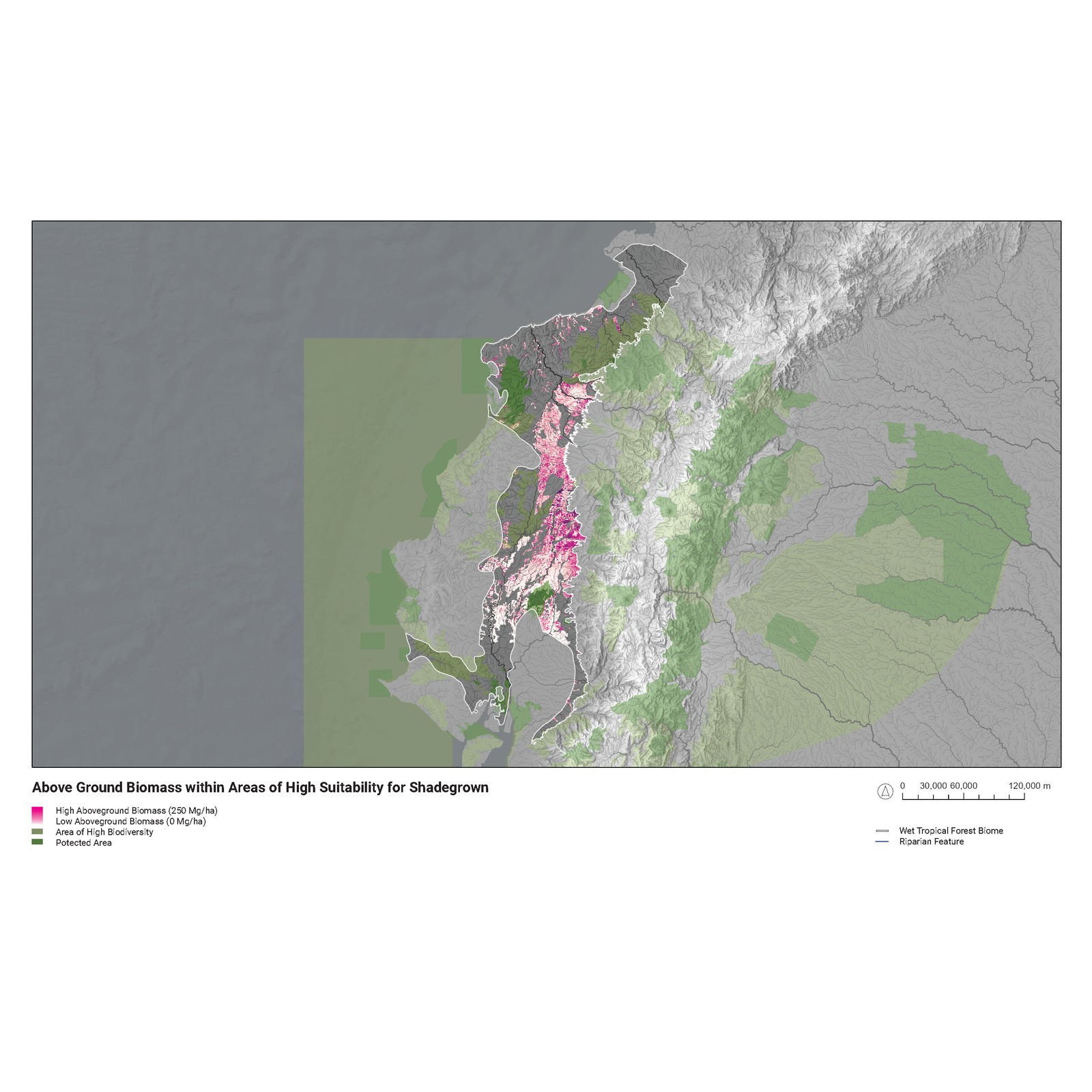
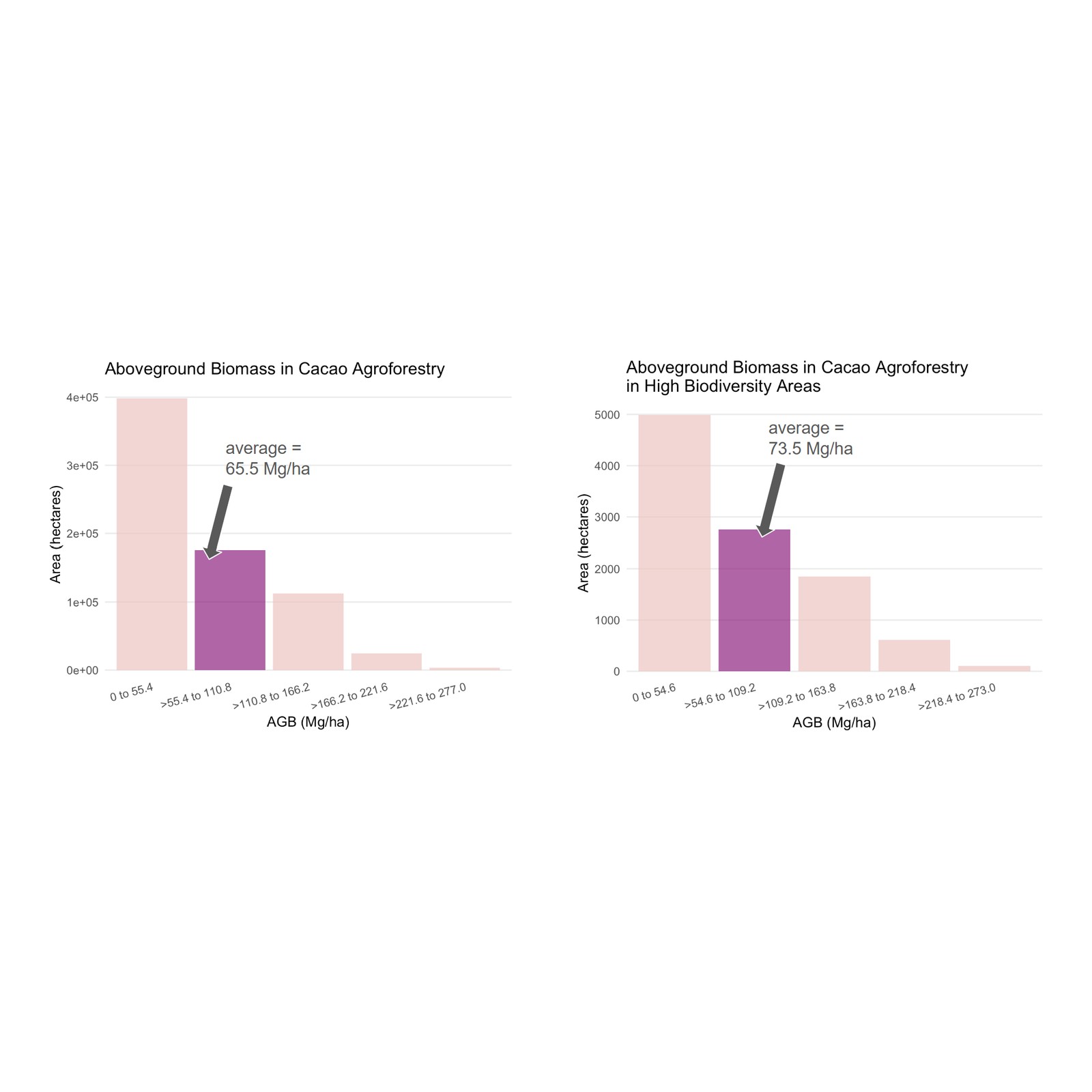
- Biomass — ESA Biomass CCI aboveground biomass sampled within those high-suitability areas and within their high-biodiversity subset, binned to show the distribution rather than a single mean.
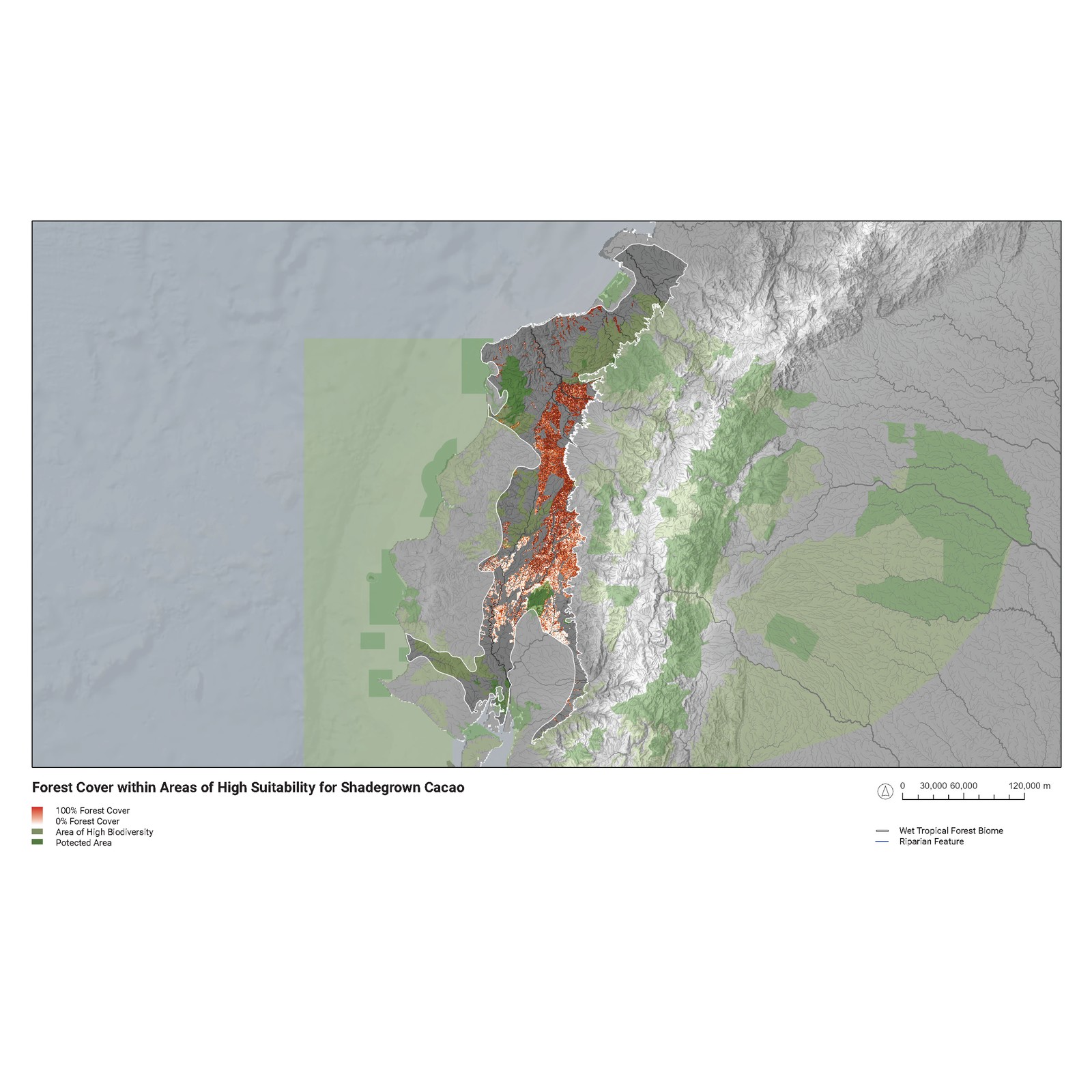
- Forest cover — Global Forest Watch canopy cover measured against the roughly thirty percent that a shade-grown operation implies.
- Revenue — a variety-by-variety model comparing CCN-51 and Nacional under full sun and thirty to forty percent shade, against both market and subsidised prices, solved for the carbon price that closes the shortfall.
- Carbon between $20 and $30 per Mg lets most shade-grown varieties match the sun-grown market rate. At $5, the domestic price in neighbouring South American markets, growers would need $1,500 to $3,000 per hectare from timber, fruit, or other sources instead.
- Roughly 40,000 hectares of suitable land carry less biomass than an average shade-grown plantation. A modest 25 Mg/ha improvement across that area implies about a million additional Mg of storage, some 5,000 hectares of it inside high-biodiversity areas.
- About 25,000 hectares of already-deforested land could convert to shade-grown production at a thirty percent canopy target without touching intact forest.
- The high-suitability corridor runs between existing protected areas, so the land that pays for itself in cacao also functions as connective habitat.
- Available land-cover data cannot locate existing cacao production at usable resolution, which is the binding constraint on any scenario planning built from it.
The case for agroforestry crediting comes down to a price: what a ton of carbon has to be worth before a smallholder can afford to keep a canopy standing. Mapping suitability, biomass, and forest cover in one frame converts the argument into specific hectares and a specific threshold — the form in which a program designer or a fund can act on it.