Siting Carbon Storage in the Columbia River Basalts
Washington has committed to net zero while its electricity demand rises and hydropower output declines. Residual emissions it cannot eliminate have to go somewhere permanent. The Columbia River Basalt Group underneath the eastern half of the state can mineralize roughly 40 billion metric tons of CO₂ — basalt reacts with carbonated water to lock carbon into rock rather than merely trapping it.
The constraint is not capacity but siting: storage has to sit near capturable sources, over geology regulators will permit, on land whose owner can lease it. Those three conditions had never been mapped against each other, so the state had a resource and no way to say where a project should go.
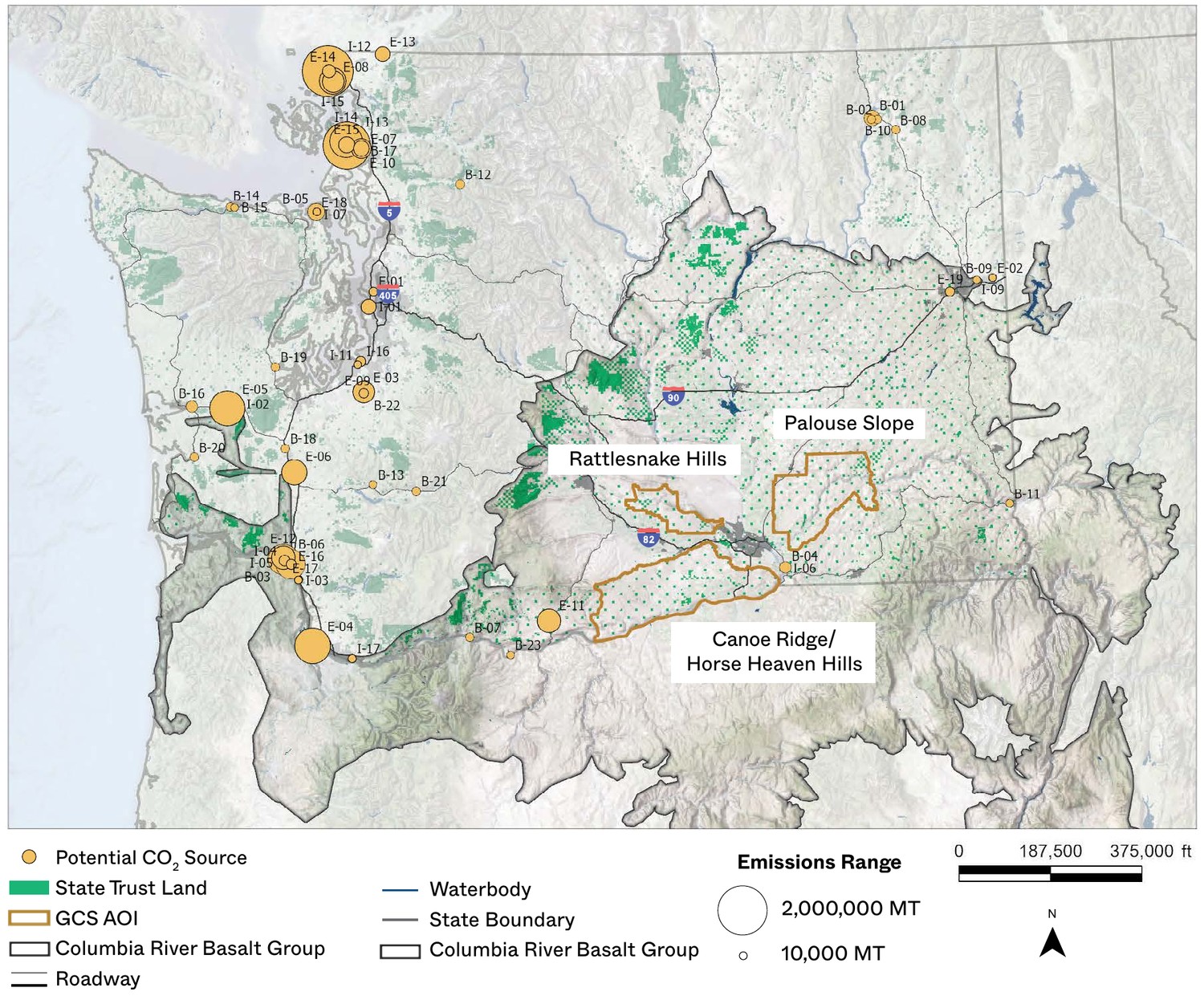
The siting assessment layered the supply of storage against the demand for it, then narrowed to parcels a public agency could act on. Public Assembly led its spatial analysis and cartography.
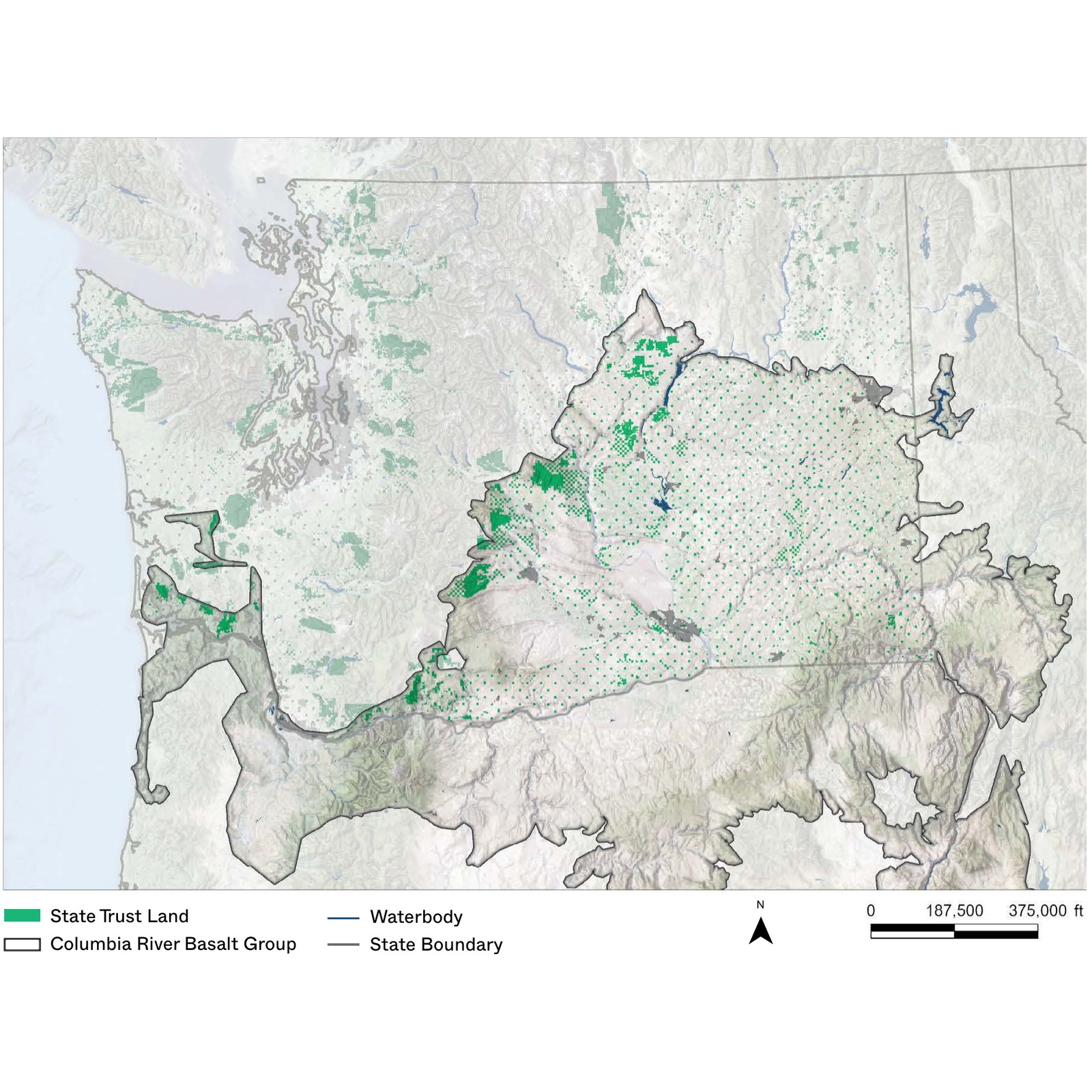
- Land base — DNR-managed trust lands intersected with the CRBG extent: 1,420,800 acres of state trust land sit above the formation, and lease revenue from it flows to public education.
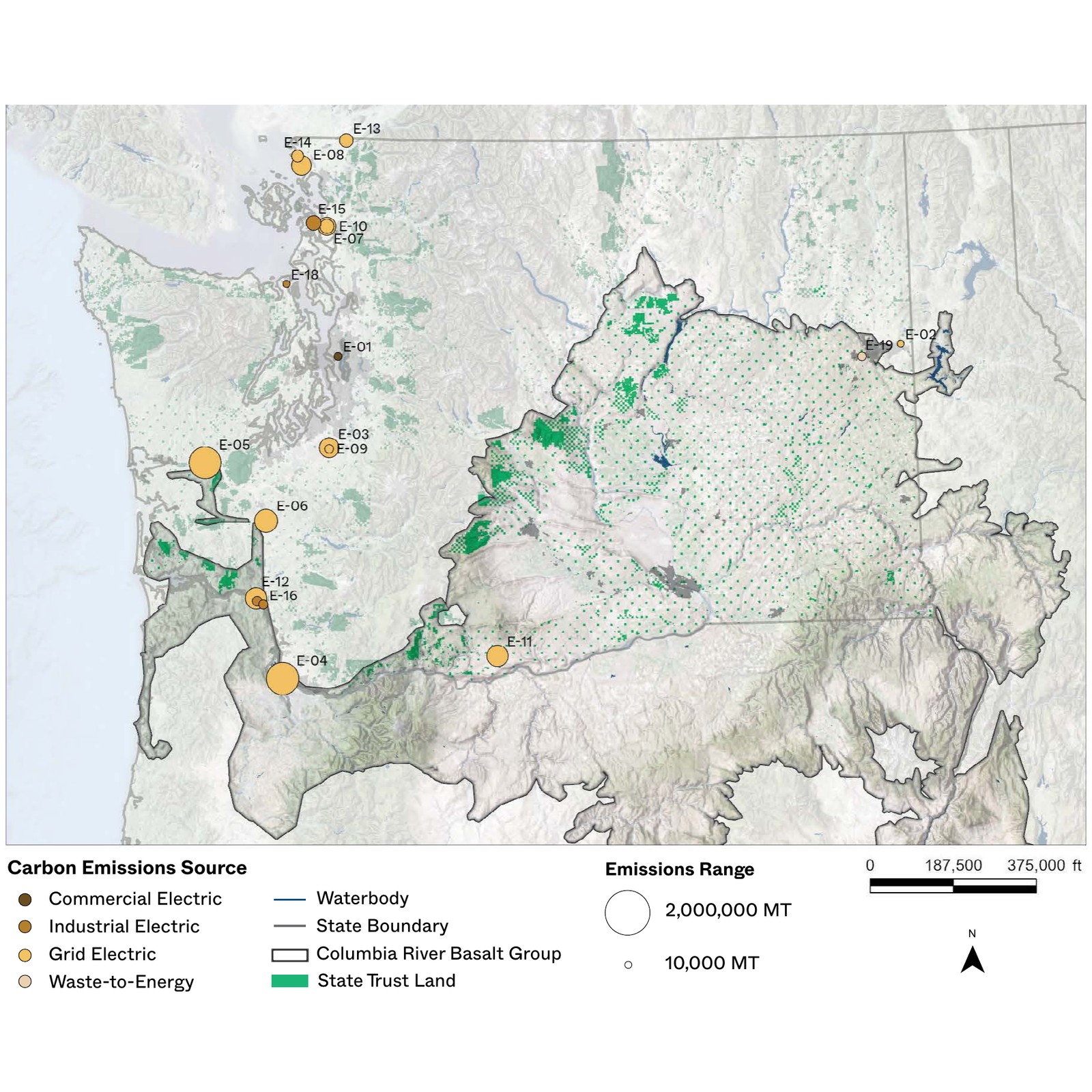
- Emissions stocktake — every 45Q-eligible point source in the state mapped by volume and road distance to the basalt: power generation, waste-to-energy, refineries, pulp and paper, cement, plus potential DAC and BECCS facilities.
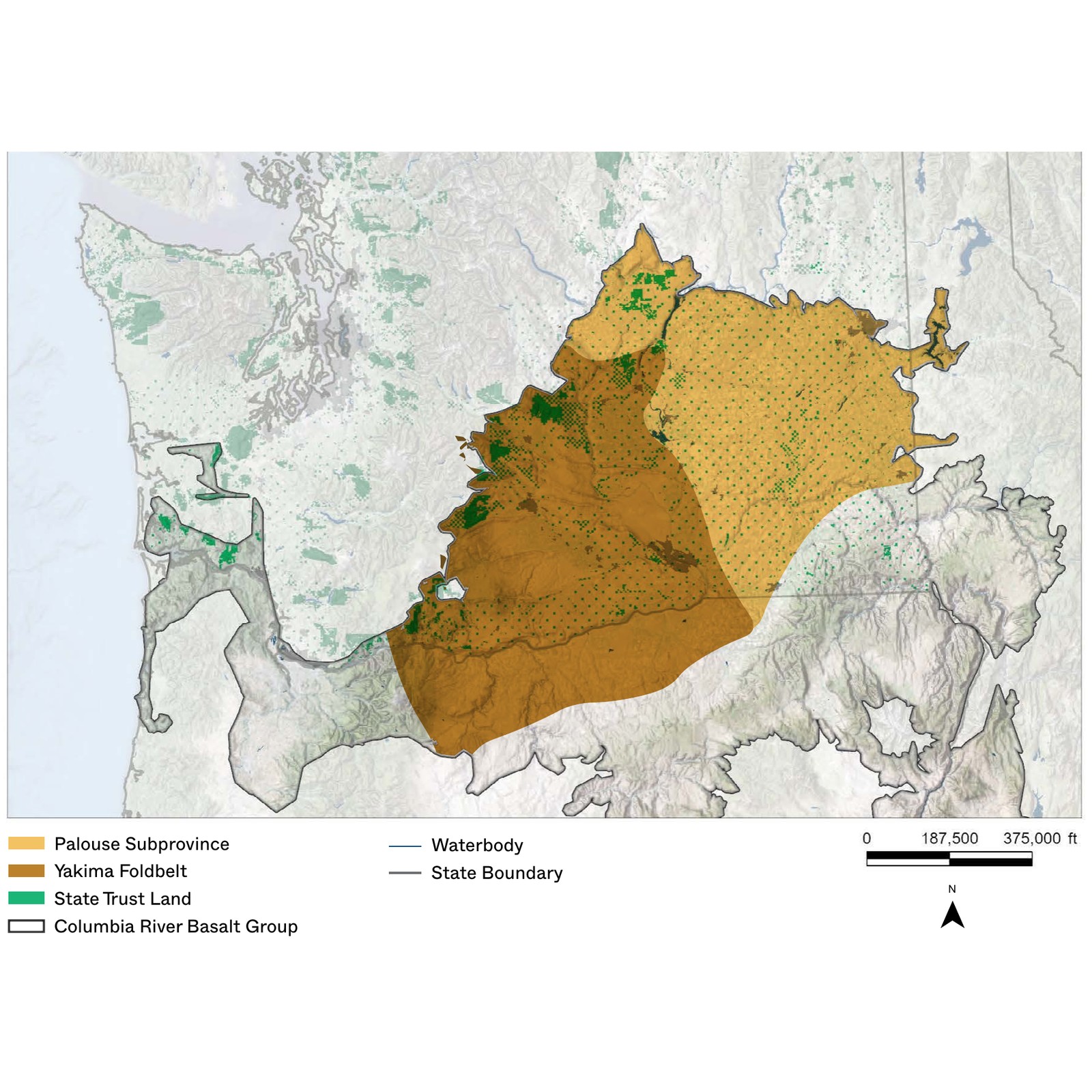
- Geologic screening — CRBG subregions ranked on structural suitability, isolating the Yakima Fold Belt and the Palouse Slope, where synclines preserve thick, laterally continuous basalt with multiple reactive flow tops.
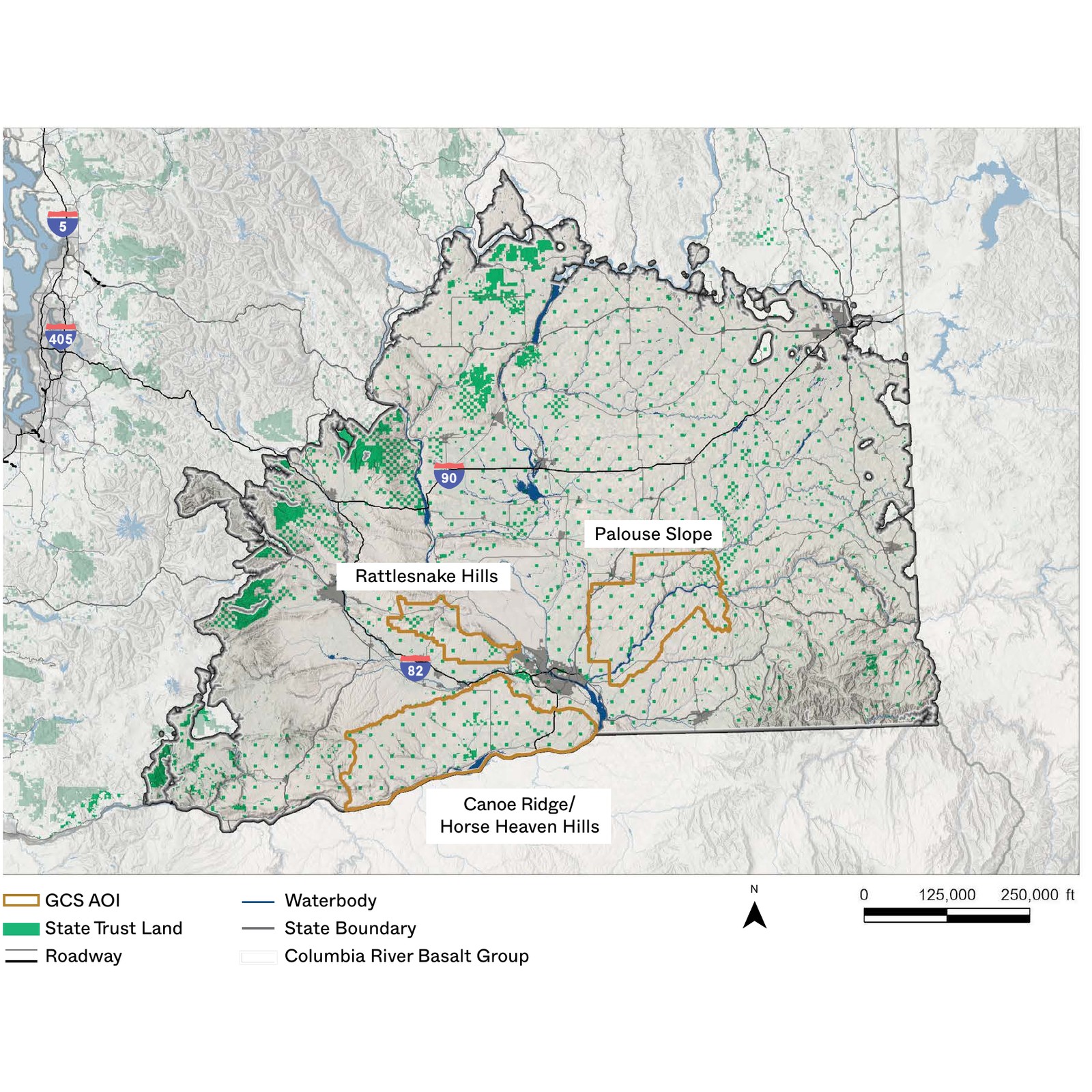
- Prioritization — geology, source proximity, infrastructure access and trust-land ownership resolved into three areas of interest, then down to individual parcels.
- Three areas of interest carry the strongest case for further exploration: Canoe Ridge / Horse Heaven Hills, Palouse Slope, and Rattlesnake Hills.
- 339 trust-land parcels — 127,588 acres — fall inside them, giving DNR a concrete portfolio rather than an abstract resource.
- Facilities assessed in the stocktake emit 20.9 million MT CO₂ a year; 11 million of that sits within 70 miles of the basalt, close enough for transport economics to work.
- At five to ten operational sites over a 75-year lease term, the trust could return an additional $3.8–$6.5 million to public education.
The chemistry of basalt mineralization is settled; where to do it is not. Storage becomes actionable only as specific parcels — owned by an agency, near an emitter, over permittable geology. Layering the geology, the emissions inventory, and the ownership map turned a statewide potential into a shortlist DNR can consult tribes about and act on.
The full report is published by the Carbon Containment Lab: TrapRock (December 2025).